

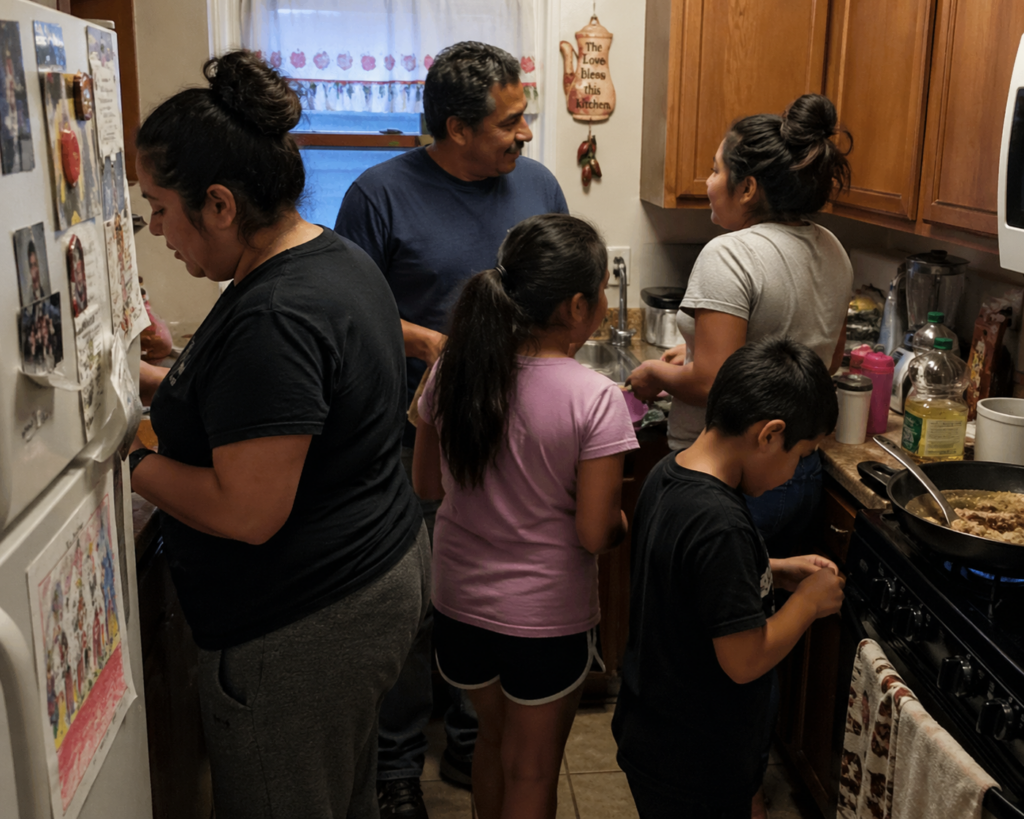
There’s a moment most growing families recognize. Maybe it’s the second time in a week you’ve tripped over something in the hallway. Maybe it’s the morning you realize both kids are sharing not just a room but a dresser, and neither of them can find anything. Maybe it’s the backyard that’s barely big enough to kick a ball around, and you’re watching your kids squeeze their childhood into a space that was never really designed for it.
That moment is worth paying attention to. I’ve sat across from a lot of families who’ve been ignoring it for longer than they should have — not because they didn’t know, but because upsizing feels like a big decision, and big decisions are easy to put off.
Here’s what I tell them: it’s usually not as complicated as you’ve built it up to be. Especially on Galveston Island, where space exists, neighborhoods are genuine communities, and the quality of life for families is something you really can’t put a number on.
The Signs You’ve Outgrown Your Space
Families rarely outgrow their homes all at once. It happens gradually, and then suddenly. Here’s what I see over and over:
The bedrooms that made sense for two are now shared by three, and the tension is starting to show. The kitchen table is also the homework station and the craft table and the overflow storage zone. The garage long ago stopped being for cars. The backyard — if there is one — has become a battleground over the single patch of grass.
None of these things are emergencies. But they accumulate. And what I’ve noticed is that by the time a family calls me, they’ve usually been living with the friction for a year or two longer than felt comfortable. They stayed because it felt like the wrong time, or because the market felt uncertain, or because the idea of moving with kids in school felt like too much.
I understand all of that. But I’d also ask you this: what does another two years of the same look like?
What Families Are Really Looking For
When families come to me about upsizing, they’re almost never just looking for square footage. What they’re actually looking for is room to breathe — for themselves and for their kids.
That means a real backyard where children can play without scheduling it around each other. It means a bedroom door that closes. It means a driveway where bikes can live without taking up the living room. It means a neighborhood where you know the family two doors down, where the streets are quiet enough that a child on a bicycle is a normal sight rather than a stressful one.
On Galveston Island, that version of life is available — and often at price points that surprise people who’ve been looking at the Houston market.
Why Galveston Makes Sense for Growing Families
I’ll be honest with you about Galveston, because that’s how I prefer to work. It’s not the right fit for every family. If you need to be in a major city school district with forty-five extracurricular options, there may be better fits. Galveston is an island. It has island quirks. The schools, the grocery situation, the commute — these are real considerations and I’ll always lay them out plainly.
But for families who can make it work — and many more can than you’d think, especially with hybrid work schedules — Galveston offers something genuinely hard to find: community.
The island has neighborhoods where people actually know each other. Midtown has established blocks with big trees and families who’ve been there for decades. The East End has historic homes with the kind of character and space that simply doesn’t exist in most Houston suburbs at comparable prices. The West End offers newer construction with larger lots and a quieter rhythm. All of it is within reach of the Gulf — and I’d be leaving something important out if I didn’t mention that raising kids near the water does something good for them. The island teaches patience, attention, and a kind of resilience that’s hard to put on a spec sheet.
Flood zones are real and worth understanding before you buy — I’ll always walk you through what a property’s zone means for insurance and long-term planning, because that transparency is part of my job. But for families who’ve done their homework, Galveston real estate offers real value, real community, and real room to grow.
When is the Right Time to Upsize?
Here’s my honest take: there’s no perfect time. There will always be a reason to wait. Interest rates will always be either too high or about to change. The kids will always be at a transition point in school. The market will always feel like it could do something different next quarter.
What I’d focus on instead is this: how long do you want to put off the version of home life you actually want?
If your family has been cramped for a year and you’re trying to hold out for another year to see what happens, you’re essentially paying — in stress, in friction, in the childhood years that pass — for a delay that may not actually improve your position.
When families are ready to have an honest conversation about what’s realistic for them — budget, timing, school considerations, what they actually need versus what they think they need — that’s when I’m most useful. Not before, and not to pressure anyone. Just to help you think it through with someone who knows the island.
What To Do Next
If any of this sounds like your household right now, I’d invite you to reach out — not to start a transaction, but to start a conversation. Tell me where you are, what your family needs, and what you’ve been sitting on. I’ll give you my honest read on what’s available and whether it makes sense for you to move.
You can find me at reidnelsonrealty.com, or just send me a message. No pressure — just a conversation with someone who knows Galveston and wants to help you find the right fit.