Family-Friendly Neighborhoods in Galveston, TX
Moving to Galveston with children means looking beyond square footage.
You’re thinking about parks. Schools. Yard space. Quiet streets. Proximity to the Seawall. Stability.
Galveston offers several neighborhoods that support everyday family life — not just vacation living.
If you’re relocating or upsizing, this guide will help you identify where families tend to settle on the island.
What Families Typically Look For in Galveston
When families buy on the island, they often prioritize:
- Larger interior lots
- Residential streets (low short-term rental density)
- Park access
- School proximity
- Lower flood exposure when possible
- Short commute to UTMB or Houston access
Unlike the far West End beach communities, most family buyers gravitate toward Central Island and Near West neighborhoods.
Already Living in Galveston? Ready for More Room?
Not every family moving into a larger home is relocating.
Many families already living on the island reach a point where the house that once felt perfect no longer fits.
Maybe:
The kids are sharing bedrooms
You need a home office
You want a yard instead of a small patio
You’ve outgrown a historic cottage
You’re ready to move from a condo into a standalone home
Upsizing on the island requires a slightly different strategy than relocating.
Common Move-Up Paths in Galveston
Families often transition:
- From East End cottages → to Central Island brick homes
- From condos → to Near West neighborhoods
- From smaller Midtown homes → to Cedar Lawn or Adler Circle
- From starter homes → to properties with pools or larger lots
The goal isn’t just more square footage.
It’s better function.
Upsizing locally often involves coordinating:
- Listing your current home
- Evaluating equity position
- Monitoring limited mid-island inventory
- Managing inspection and insurance overlap
Because inventory can be tight in Central and Near West neighborhoods, preparation matters.
Understanding your current home’s value is step one.
Timing the Sale & Purchase
Staying Close to What You Love
Staying Close to What You Love
Many families don’t want to leave their:
- School zone
- Church community
- Park access
- Seawall routine
- Established friendships
Upsizing doesn’t have to mean leaving your neighborhood entirely.
Sometimes it means moving just a few streets over.
Families often consider upsizing when:
✔ A new baby arrives
✔ Kids enter middle or high school
✔ Work-from-home becomes permanent
✔ Equity has increased
✔ Interest rates stabilize
✔ Renovating feels less practical than moving
Every family’s timeline is different.
A quiet market conversation can clarify whether staying, renovating, or moving makes the most sense.
When Is the Right Time to Upsize?
Best Galveston Neighborhoods for Families
Central Island (Midtown Galveston)
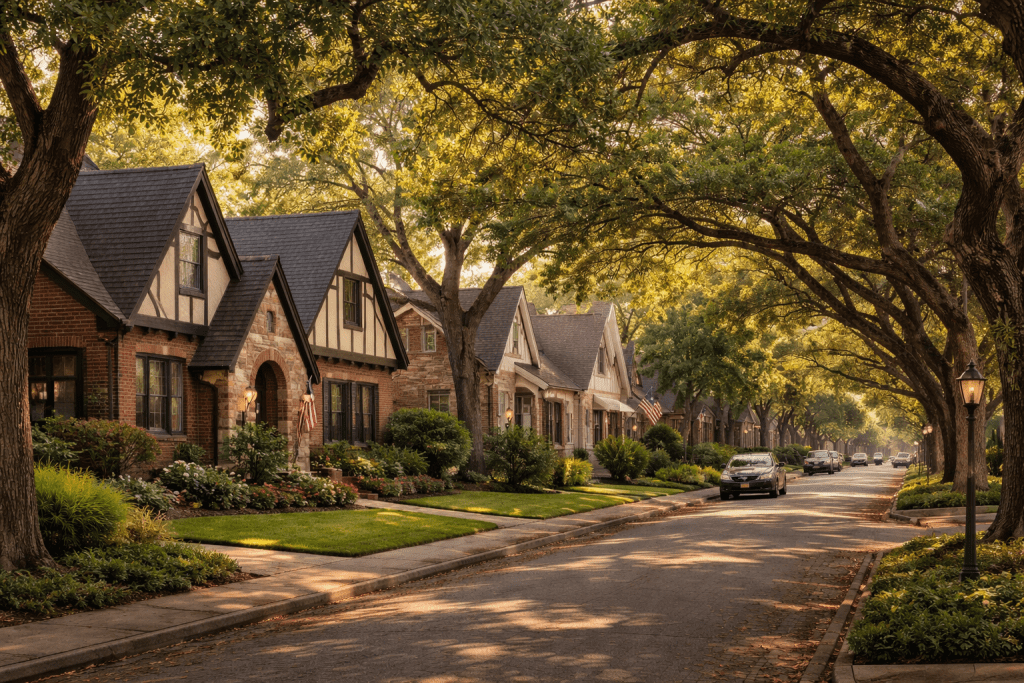
Central Island neighborhoods offer:
- Established residential streets
- Brick traditional homes
- Larger lots than historic districts
- Close access to Broadway and Seawall
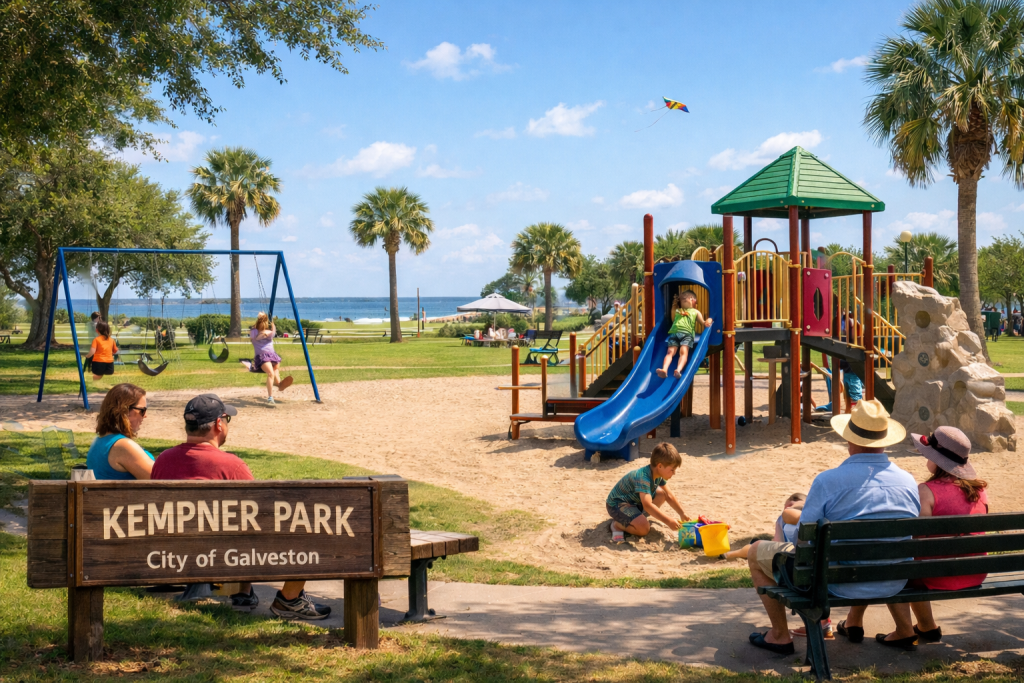
- Kempner Park and Menard Park proximity
Popular areas include:
- Cedar Lawn
- Denver Court
- Fort Crockett / Hampton Battery
- Kempner Park area
These neighborhoods are largely year-round residential and tend to feel stable and community-oriented.
Near West End
West of 45th Street but east of Jamaica Beach, the Near West offers:
- Beach access within minutes
- Lower short-term rental presence (in many pockets)
- Family-oriented communities
- Moody Gardens proximity
Notable areas:
- Adler Circle
- Colony Park
- Campeche Cove
These neighborhoods provide beach convenience without beachfront volatility.
East End (Selected Areas)
Parts of the East End appeal to families who value:
- Walkability
- Character homes
- Proximity to UTMB
- Cultural amenities
Your children can grow up in historic houses that have been home to families for generations. Sub-areas such as Lost Bayou and Fish Village often attract full-time residents and medical professionals who enjoy a mid-century aesthetic.
Schools in Galveston
Galveston ISD serves the island.
Notable programs include:
- Oppe Elementary (Coastal Studies Magnet)
- Crenshaw Environmental Science Magnet
- Ball High School (New North Campus opened January 2026)
Private options include:
- Trinity Episcopal School
- Holy Family Catholic School
- Satori School
- O’Connell College Preparatory
School zoning should always be verified directly with GISD before purchasing.
Flood Zones & Insurance Considerations for Families
Flood exposure varies block by block.
Families often seek:
Higher elevation areas
X flood zones where available
Elevated construction
Clear windstorm documentation
Flood designation does not automatically mean high risk — but it must be evaluated thoughtfully.
What Daily Life Looks Like

For many families, island living includes:
Evening bike rides on the Seawall
Beach afternoons without packing the car for hours
Festivals and seasonal events
Community sports leagues
Neighborhood gatherings
Central and Near West areas often provide the strongest balance between beach access and everyday stability.
Is Galveston a Good Place to Raise a Family?
For many families, yes — particularly those who value:
- Smaller community feel
- Coastal environment
- Walkable access
- Proximity to Houston
- Strong neighborhood identity
The key is choosing the right part of the island.
If you’re unsure which streets or zones fit your priorities, we can narrow that down together.
Explore Family-Friendly Homes in Galveston
Browse homes in:
- Cedar Lawn
- Adler Circle
- Kempner Park area
- Colony Park
- Campeche Cove
- Select East End pockets
Frequently Asked Questions About Moving to Galveston with Kids
Are there neighborhoods in Galveston that are mostly full-time residents?
Yes. Central Island and many Near West neighborhoods tend to be primarily year-round residential.
Are flood zones a major issue?
Flood zones vary by property. Some areas fall in lower-risk X zones, but each address should be verified.
Is the West End good for families?
The far West End is more second-home driven, though many subdivisions like Evia and Jamaica Beach do have year-round residents.
Are there parks in Central Galveston?
Yes. Kempner Park, Menard Park, and Seawall recreation areas are popular with families.
How far is Galveston from Houston?
Galveston is approximately one hour south of Houston, depending on traffic and specific area of Houston.
Should we renovate or move up in Galveston?
It depends on lot size, zoning flexibility, and long-term neighborhood goals. In some cases, upsizing provides better long-term value than expanding a smaller structure.
Are larger family homes available in Midtown?
Yes, though inventory can be limited. Monitoring listings early improves your chances.
Considering a Move with Kids?
Tell me what matters most — yard size, school proximity, flood zone, commute, architectural style — and we’ll narrow down neighborhoods that support your family’s next chapter.